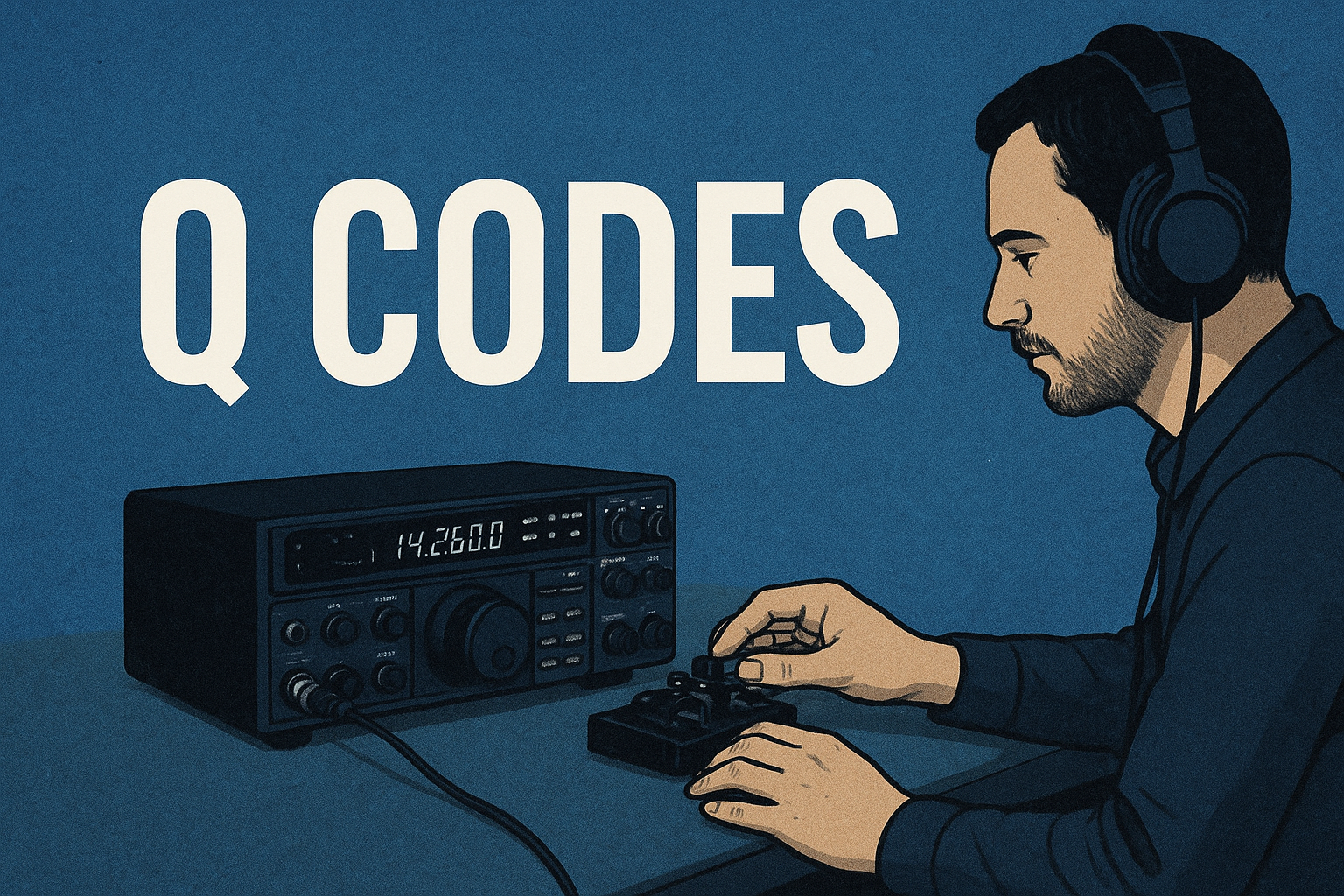
 Q codes are a set of standardized three-letter abbreviations that originated in the early 1900s for use in radiotelegraph communication. Today, they remain an essential part of amateur radio language, helping operators communicate efficiently — especially when conditions are poor or when operators speak different languages.
📡 What Are Q Codes?
Q codes were originally developed for maritime and aviation radio operations to make Morse code communication faster and clearer. Each Q code begins with the letter “Q”, followed by two other letters that define its meaning.
For example:
-
QTH – “My location is…” or “What is your location?”
-
QRM – “Interference from other stations.”
-
QSL – “I acknowledge receipt” or “Can you confirm reception?”
Although Morse code is no longer the only form of radio communication, Q codes continue to be widely used in voice (SSB, FM) and digital modes among amateur radio operators worldwide.
🔤 How Q Codes Work
Each Q code can be used either as a question or a statement, depending on the context.
For example:
-
QTH? → “What is your location?”
-
QTH Jakarta → “My location is Jakarta.”
This dual meaning helps reduce the need for long sentences and allows for concise, standardized communication.
📻 Commonly Used Q Codes in Amateur Radio
| Q Code | Meaning (Question) | Meaning (Answer/Statement) |
|---|---|---|
| QTH | What is your location? | My location is… |
| QRM | Are you being interfered with? | I have interference. |
| QRN | Are you troubled by static? | I am troubled by static. |
| QRP | Shall I decrease power? | Reduce power (usually 5 watts or less). |
| QRS | Shall I send more slowly? | Send more slowly. |
| QRT | Shall I stop sending? | I am stopping transmission. |
| QRZ | Who is calling me? | You are being called by… |
| QSL | Can you acknowledge receipt? | I acknowledge receipt / Confirmation card. |
| QSO | Can you communicate with…? | I can communicate with… |
| QSY | Shall I change frequency? | Changing frequency to… |
| QSB | Is my signal fading? | Your signal is fading. |
| QRP | Shall I reduce power? | Transmitting with low power. |
🌍 Why Q Codes Still Matter
Even in the age of smartphones and internet-based communication, Q codes remain relevant because they:
-
Break language barriers — radio amateurs from different countries can understand each other easily.
-
Save time — especially during contests or poor signal conditions.
-
Preserve tradition — they are part of amateur radio culture and history.
-
Enhance clarity — short, standardized messages reduce misunderstanding.
🧭 Q Codes Beyond Amateur Radio
Some Q codes, like QSL and QRZ, have even made their way into everyday amateur radio slang:
-
“I’ll QSL you later” means I’ll confirm the contact later.
-
QRZ.com is a popular online callsign database, named after the Q code “Who is calling me?”
🎯 Final Thoughts
Mastering Q codes is part of becoming a more skilled and efficient radio operator. Whether you operate CW, SSB, or digital modes, understanding these short codes helps you communicate clearly and effectively — continuing a proud tradition that connects hams around the world.
73 and good DX!